What happened
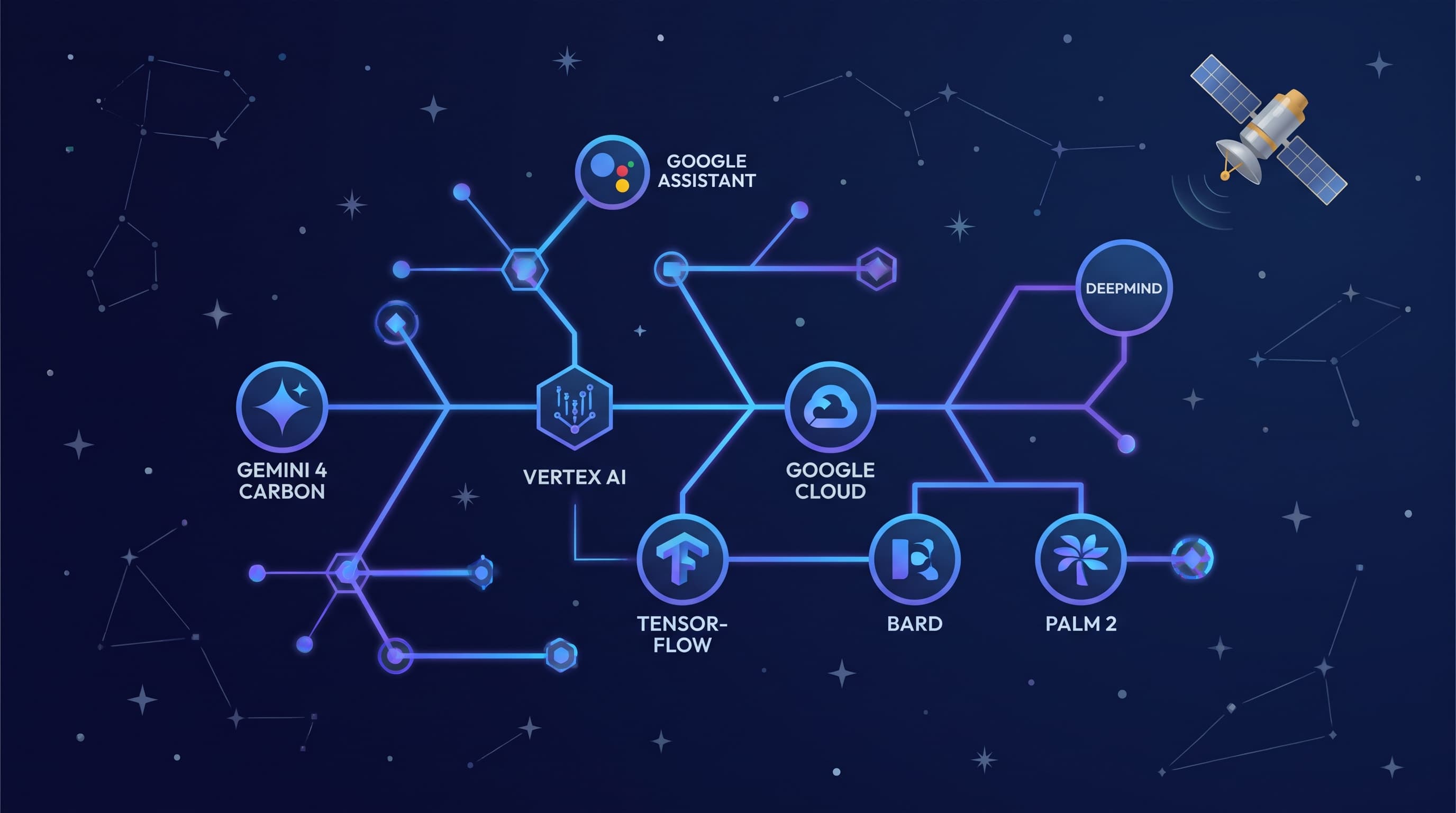
October 2026 was a packed month for Google's AI work, and the company rounded it all up in a recap published on LinkedIn. The month started with the global roll-out of Gemini 4 Argon, described as a frontier reasoning model, which went live for complex coding, financial analysis and legal workflows across Google AI Studio, the Gemini API, Google Cloud, Search and the Gemini app. There is even a version called Gemini 4 Argon for Robotics for physical-world reasoning. Two weeks later, Google announced Gemini 4 Carbon, which it calls its strongest model yet for long-horizon engineering and cybersecurity defence. Carbon is not widely available yet — it is in pre-release testing with the U.S. government and selected cyber defenders through the Fairwind Program while safety guardrails are refined.
The other big reveals
Beyond the Gemini models, Google introduced several things worth knowing about:
- Genie 4 — a system for real-time interactive worlds with advanced physics, lifelike human movement and native audio. You can steer scenes using plain language, and it helps create safe training environments for robots and AI agents.
- SynthID Detector — expanding globally in English so anyone can check whether an image, video or audio clip was made with AI. Google says it has watermarked more than 180 billion images and videos and 240,000 years of audio, and the detector also spots content from partners like OpenAI, NVIDIA, Kakao and Apple.
- Android scam protection — an opt-in Enhanced protection mode in Google Messages that uses Private AI Compute to catch conversational scams. Google says its Scam Detection already flags more than 5 million suspected scam calls and texts every month.
- Google Fitbit Edge — a new fitness tracker with up to seven days of battery life, precision GPS, automatic workout recognition across 50+ activities, and guidance from the Gemini-powered Google Health Coach.
- A quantum milestone — in a study published in Science, Google Quantum AI showed that a technique called "magic state cultivation" works on its Willow processor, cutting errors roughly 40-fold.
- Project Suncatcher — after launching TPUs into low-Earth orbit, Google's prototype satellite returned the first AI response generated by a data-centre-class TPU in space: a haiku written by Gemma 4.
A real-world example: checking if an image is AI-made
Say you run a small news page and someone sends you a dramatic photo of a local event. Before you publish it, you want to know whether it is genuine or generated. With SynthID Detector now open in English, you can upload the image and get a read on whether it carries an AI watermark from Google or one of its partners. For a publisher, that is a quick, practical check that can stop a fake picture from going out to thousands of readers — and it ties directly into wider worries about trust in journalism, which The Verge recently raised when it said it caught Google altering news headlines using generative AI. Verification tools matter precisely because the line between real and generated content keeps getting harder to see.
Why it matters and what's next
The pattern here is clear: Google is pushing new AI abilities quickly while trying to hold back the most sensitive ones, like Carbon's cybersecurity features, until testing is further along. For everyday users, the most useful changes are the practical ones — scam protection on your phone, a way to check AI content, and a fitness tracker that offers coaching. The quantum and satellite news are longer-term bets that may not touch daily life for years but show where the research is heading.
If you want to use these kinds of AI tools in your own business, Brain.mt can help you put AI to work in a way that fits what you actually do. Contact me for more information — I also offer dedicated workshops and training on this subject, so your team can learn to use these tools with confidence.